
An excerpt from Beth Baron’s forthcoming book tells the story of pioneering Egyptian physician Hilana Sidarus and women entering medicine.
Hilana Sidarus (1904-1998) dreamed of becoming a doctor. Growing up in the Delta city of Tanta, she was beset with medical problems and hoped to help others. Her own education was postponed due to ill health, and she only entered the Coptic School in Tanta in 1912 at the age of eight. After graduating in 1916 at the age of twelve, she went to the Saniyya School in Cairo as a boarding student from 1917 to 1921.[1]
The Kitchener Medical Mission to London
The Egyptian state had sent male missions to Europe from the time of Mehmed Ali Pasha, Ottoman viceroy of Egypt (1805-1848). Female missions were a much more recent phenomenon: Amina Hasan Shukrallah, who graduated from the Saniyya School, and Hanem Hamed, who graduated from the `Abbas Girl's School in Cairo, both had studied from 1909 to 1911 at the all-women’s Homerton College in Cambridge, England, and then returned to their respective schools to teach. Other women joined subsequent math and science missions. When selections were being made for the medical mission, Hilana Sidarus was already in London studying math. She had studied for two years at the Saniyya Training College toward a four-year degree when she had been nominated for a state grant to study abroad and proceeded to London with her good friend Zaynab Kamil. There she learned that the certificate she would get would not exceed the degree that she had already earned and so sought permission to return to Egypt to continue her studies there. Instead, she was offered the opportunity of joining the Kitchener Mission and enthusiastically accepted.[3]
The six chosen in 1922 for the medical mission sponsored by the Kitchener Memorial Society came from a mix of government and non-government schools in Cairo: Hilana Sidarus and Tawhida `Abd al-Rahman came from the Saniyya Training College; Habiba `Uways came from the French Catholic Sacred Heart College (Sacré Coeur); and Fathiyya Hamid came from the Presbyterian American Mission College; Anissa (Elfat) Nagi and Kawkab Hifni Nasif came from the Hilmiyya High School for Girls. At least a couple had been active in the nationalist movement, but that did not bar them from selection. Hilana had participated as a fifteen-year-old student in nationalist demonstrations against the occupation in 1919, frequented the “House of the Nation” to attend meetings hosted by Safiyya Zaghlul, wife of the nationalist leader Sa`d Zaghlul, and joined the feminist group formed by Huda Sha`arawi. Indeed, such activism may have attracted the attention of the Egyptian officials who worked behind the scenes to select the candidates for the medical mission. Hilana, who had been attending Clapham High School in London, continued there.[6]
Given Bonté Elgood’s prominent role on the Board of Administration of the Kitchener Memorial Society, the mission targeted her alma mater, the London School of Medicine for Women, as the school of choice for the six students. A school that had its roots in training imperial women doctors to work in maternal health in India and other colonies was the logical destination for colonized women aspiring to become doctors to train. Hilana completed preparations quickly and applied for admission to the medical school in January 1923, with the headmistress of the high school where she had studied vouching for her. She passed her entrance exams, appeared for an interview, and started coursework in October 1923.
Medical school was not easy. Hilana would later say that she loved all her subjects-- which included biology, botany, histology, inorganic and organic chemistry, pharmacology, pharmacy, physics, physiology, and zoology–except anatomy.After three years of classes, Hilana began rotations in the Royal Free Hospital. On her first trip back to England over a quarter century after completing her studies, Hilana looked up one of the doctors in the hospital, identifying herself as “one of the six Egyptians who studied at the Royal Free in the good old times.”[8]
The Women Doctors Return
Egyptian women entered Qasr al-`Ayni School of Medicine just as the first of the Kitchener Mission students finished their exams and returned to Egypt to take up posts in the new hospital. Hilana Sidarus was the first to finish her degree, which she did in 1929, earning distinction. At aged twenty-five, and with her Licentiate from the Royal College of Physicians and membership in the Royal College of Surgeons, she returned to Egypt in the summer of 1930 to join the staff at the Kitchener Memorial Hospital as House Surgeon under Dr. Phyllis Epps, the head doctor. Writing from the Kitchener Memorial Hospital to the warden and secretary of the medical school, she explained that she had quickly settled into her work, though she still had one exam to take in London, “I can’t believe I have left all that life behind me – and in future if I go to England it will only be for short periods!” To her surprise, she found that the system in which hakimas trained at Qasr al-`Ayni delivered the normal labors and doctors attended the difficult births, with dayas attending births outside of the hospital, was still very much alive.[11]
Two years after her return, Elgood sent a report to the London School of Medicine for Women that Sidarus was “very good indeed.” Yet Hilana’s hard work did not translate into a promotion and the position and pay that she thought she deserved. In 1935, with her “mandatory commissioning period” completed and having the responsibility of supporting her family after her father’s death, she left her job at the Kitchener Memorial Hospital to go into private practice. As her friend Habiba `Uways, in whom she had confided, wrote to the warden at the medical school, “I am more than sorry she [Hilana] left the Hospital.” Habiba protested, “It makes me feel sad to realise how little the Committee fails to show her their appreciation by granting the salary she deserves.” To which the warden replied, “People cannot remain as Assistant Medical officers forever, and I have no doubt that Dr. Sidarous is ready now for practice on her own.”[14]
Hilana faced obstacles to advancement at the Kitchener Memorial Hospital, but British administrators were not the only opposition that she encountered. She had returned from London with high honors, including membership in the British Royal College of Surgeons, and dreamed of continuing her training as a surgeon. However, when she told Professor `Ali Ibrahim of her aspiration, he apparently replied, “Do you wish to become a surgeon while `Ali Ibrahim is a surgeon?” Was it too much for this pre-eminent Egyptian surgeon, who had attained a leadership role at the premier teaching hospital in Egypt and operated at the Kitchener Memorial Hospital, to imagine that women could also be surgeons? Blocked from advancement at the hospital and specializing in surgery, Hilana opened a private clinic in the Bab al-Luq neighborhood as a general practitioner and obstetrician, and she worked at one of the new child-care centers set up in popular quarters of Cairo. She also made routine deliveries at women’s homes, often at night when labors tended to occur, driving her own car, which was a rarity for Egyptian women at the time.This, and her financial constraints, may explain why Hilana turned down an opportunity to pursue postdoctoral studies in England in 1938, replying when she was sent an application for a postgraduate scholarship that it was not possible for her to take any post-graduate courses at that time.[17]
The returning women doctors were not without their mentors, whose support was critical for advancement. Hilana noted the kindness and guidance of Dr. Naguib Mahfouz. The pioneer obstetrician/gynecologist had been part of the group of Coptic notables and medical men who had developed the Coptic Hospital in Cairo from its beginnings as a clinic/dispensary in 1908, into a full-fledged hospital in 1926. Mahfouz invited Hilana Sidarus, over two decades his junior, to perform surgeries and deliveries at the hospital, which was opened to patients of all religions, nationalities, and classes. She secured a few beds for her patients, and the pair worked together, becoming trusted colleagues and friends. As a sign of her respect and appreciation, Hilana selected the name Mahfouz for a boy she adopted, who may have been left at the hospital by an unmarried mother. It was there at the Coptic Hospital that Hilana Sidarus attended the delivery of Mahfouz’s great grandson, Dr. Youssef Simaika (1969), spending the whole night knitting on a chair in front of his mother’s bed. Three years later, she attended the delivery of Youssef’s sister (1972) and was on hand to deliver other descendants of her mentor. Known for her charity, Hilana also attended poor women at the Coptic Hospital, delivering their babies, paying their hospital bills, and leaving an envelope containing a generous sum of money under their pillows.[20]
Patients embraced the new women doctors, although there was some initial confusion over their identities. In a television interview, Dr. Hilana Sidarus told the story that one Sudanese woman who had never seen a woman doctor before initially would not allow her to carry out an examination, thinking she was a man, for Hilana had short hair and wore a white coat. Hilana also understood the perils of being female: when families brought their daughters to her for virginity testing, she always affirmed their virginity, because, as she later told Margot Badran, “the penalties [honor killings] were too severe.” Since she had a private practice, Hilana could continue working past the mandatory retirement age for state workers. After retiring in her seventies, she continued her charitable work, translated children’s and other books, and taught English.
_____________________________________________________
Excerpt from: Beth Baron, Hard Labors: Bodies, Birth, and Medicine in Egypt (Stanford University Press, forthcoming in 2027)
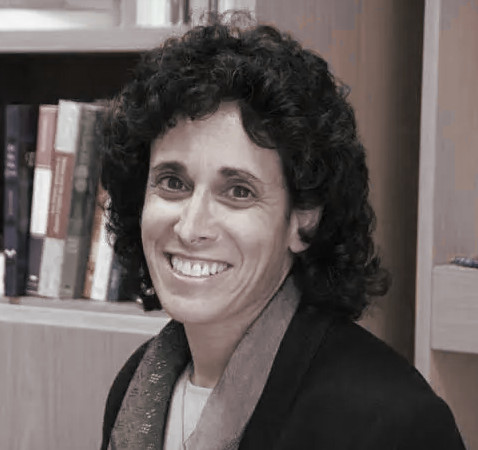
Beth Baron
Beth Baron is Professor of History at the City College of New York and Director of the Middle East and Middle Eastern American Center at the CUNY Graduate Center. She is the author of Egypt as a Woman: Nationalism, Gender, and Politics and The Women’s Awakening in Egypt. Her forthcoming book, Hard Labors: Bodies, Birth, and Medicine in Egypt (Stanford University Press), will appear in 2027.